
A realist’s view of AI: easy to pick-up, hard to master
 Martijn
Artificial Intelligence aka AI has taken the world by storm, New Zealand included. While companies are wondering ‘how, where, and why’ to use it, its employees are already on ChatGPT-like tools daily.
AI is like a classic game of pinball. It looks fun, it has flashy features and fun sounds… And it is super easy to pick-up. Just press play and go have fun. But just as the classic game of pinball, it sure is hard to master. There is more behind that flashy facade than just shooting balls randomly against bumpers. There is reason to this madness.
Something that you will begin to understand the more you play it. Or the more you watch other people play it. Standing in that arcade with your pockets filled with coins while watching in awe someone to reach the machine’s high-score in no time.
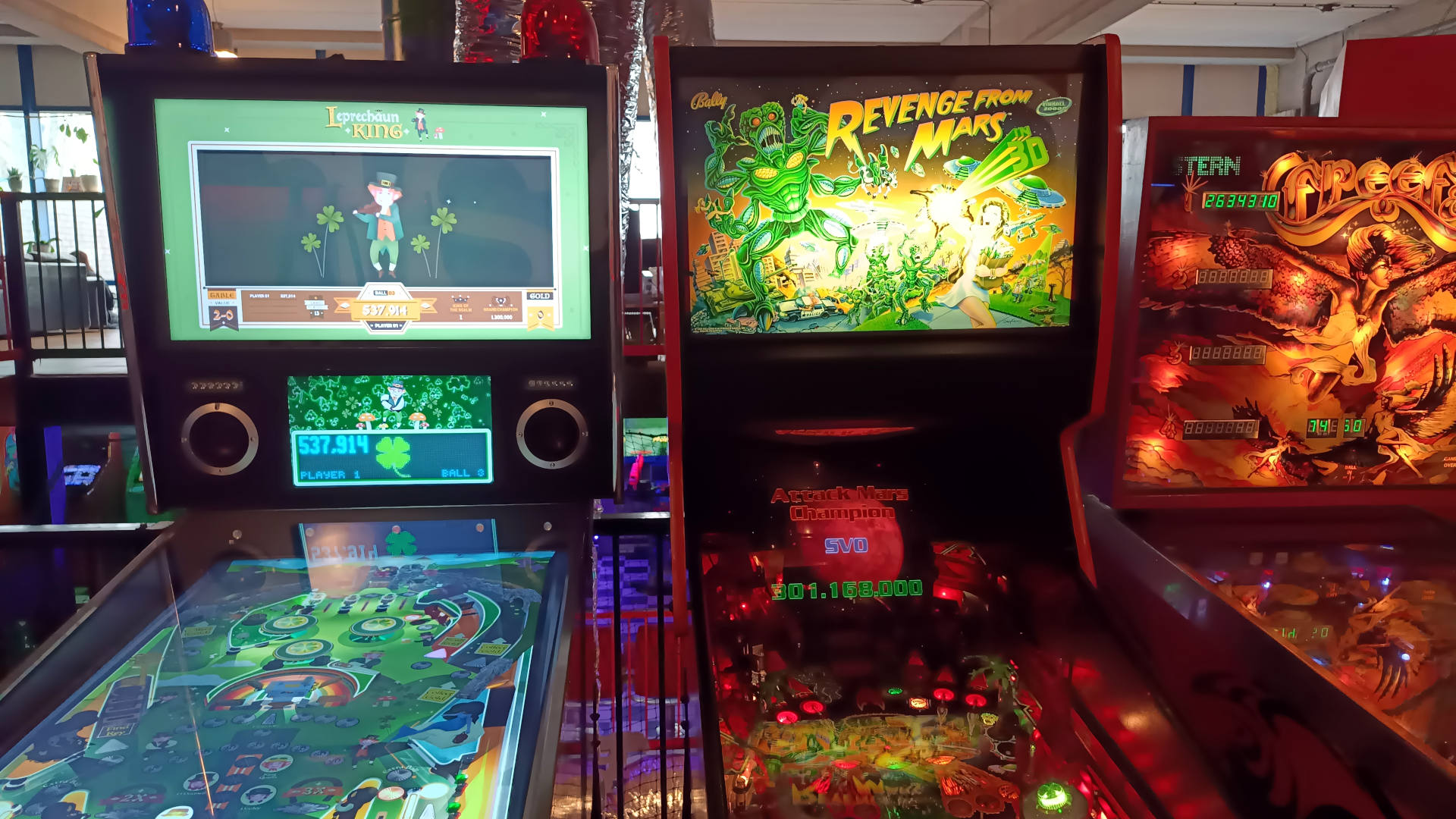
Table of Contents
- Mastering the AI game
- The basics: AI is just another tool in your toolkit
- Great... But how to use that new shiny AI tool?
- How to deal with hallucinations?
- Are you pro AI or against AI?
- What are you using AI for?
- AI tools for small businesses
- More AI in digital marketing
- What are your plans with AI, dear reader?
Mastering the AI game
The same goes for the AI game. You have to understand what AI is, how it came about and what the pitfalls and advantages are. And of course how to enable the ethical use of AI.
It is Artificial for sure… Whether AI has true ‘intelligence’ is a conversation best saved for a Friday afternoon, ideally with a glass of (non-alcoholic) craft beer, great music and geeky company.
The basics: AI is just another tool in your toolkit
Unfortunately, a lot of people that are playing around with AI see it as “something” that can create a final product, a final thing that you can use in one of your business tasks. Just enter some words, press play (hello pinball machine reference) and presto a cooked result leaves the oven.
Well, it may look great at first that result from your AI prompt, it’ll look different when you take a closer look at it or see a few of these results next to each other. There is a reason why all of a sudden a lot of crappy website with similar wording – too many words and mostly the same kind of words – are popping up in the search results. Or in your Spotify playlist. Or in your favourite online game store. AI slop is everywhere.
AI is a new tool, we just have to learn how to use it. Don’t just copy-paste the result of AI. Use the results of AI as an ingredient to create an amazing dish. Add your flair, your creativity, your skills and your personality to come up with a great end-result.
And while you are being critical, don’t just believe everything that AI spits out. It does make mistakes. You are the fact-checker of everything it spits out. Always be critical!
Great... But how to use that new shiny AI tool?
Okay, I have to admit, just saying that AI is a new shiny tool and you have to figure out how to use it, may be a bit of a shortcut or an easy one-liner. After seeing a comment like below popping up in an article by Bert Hubert...
"Then there are the moderates, who say, “AI is just a tool; it all depends on how you use it.” That’s true enough, but they never explain how to use it well, or if this is likely to happen, which makes the advice of limited practical value." - Bert Hubert
....it was clear that I needed to update my blog post. For a lot of people or organisations additional info about how to use AI is needed. So from a practical standpoint I think it is important to realise the following and at least take these steps...
Face the reality: AI is already in use
Your employees are already using AI, whether your company has officially implemented it or not. They use it either at work for work stuff or at home for fun stuff. Ignoring this reality risks leaving usage unchecked and unguided. See it as an opportunity. Your employees already know a lot about AI, so leverage that knowledge.
- Start with a conversation: Ask your teams what tools they’re using, how they’re using them and what they expect from AI. How do they think it will make their work easier or better?
- Gather insights: You’ll quickly see that each department has unique perspectives and use cases. Marketing might use AI for content generation, while engineering could use it for code optimisation. That's a great starting point.
Set boundaries: create a company-wide AI policy
Once you understand how AI is being used, it’s time to set clear guidelines.
- Establish what’s allowed and what isn’t: For example, is it acceptable to use AI for drafting internal documents? What about customer-facing content? Are there data privacy concerns to address?
- Clarify ethical red lines: Ensure the policy addresses issues like bias, transparency and accountability. For instance, if AI is used in decision-making processes, how will you ensure fairness and avoid discrimination?
Select and endorse official AI solutions. Create a range of standardised tools
Not all AI tools are created equal and using a patchwork of unvetted tools can lead to inconsistencies, security risks and inefficiencies.
- Curate a list of approved tools: Identify the AI tools that best fit your organisation’s needs and values. One team might benefit from a specific data analysis tool, while another could use a different platform for creative tasks.
- Make them official: Designate these tools as the standard for specific teams. This is to make sure everyone is on the same page and reduces the risk of shadow IT (unauthorised tools being used without oversight).
- Provide training: Offer resources like a knowledgebase or workshops to help employees use these tools effectively and responsibly.
Educate on the hidden costs of AI
AI isn’t just a tool that magically appears, it’s built on real resources, ethical dilemmas, and environmental impacts that users should be aware of.
- The data dilemma: Explain how AI models are trained on massive amounts of data, often scraped from the internet without explicit permission. This raises questions about copyright, consent and fairness.
- Environmental Impact: Highlight the energy and water costs of training and running AI models. Data centers consume massive amounts of electricity (often from non-renewable sources) and water for cooling.
- Encourage responsible usage: Frame AI as a shared resource with real-world consequences. Just as you wouldn’t leave the office lights on overnight, employees should think twice before running unnecessary AI queries or experiments.
This approach creates a structured, actionable plan and gives meaning to one-liners like "AI is just a tool". After all, it’s not just about having the tool, it’s about understanding it, knowing how and when to use it, so guiding and optimising its use will benefit everyone in the organisation.
How to deal with hallucinations?
Hallucinations is a fancy word that is being used in the world of AI a lot. It is a nice & friendly way of saying "AI can (and will) make mistake so always check (and double-check) its output".
However as so many users simply copy-paste AI's output in their work (without questioning or even checking it) the word hallucinating applies more to the average user of AI than to the AI system itself.
Therefore, a reminder so the people in the back can hear it as well: AI is a tool that has been added to your toolbox. You can use (or not) but always remember that its output is an ingredient that you have to process & tweak to turn it into something delicious. Its output is not final and should not be used without checking!
Are you pro AI or against AI?
I’m realistic when it comes to AI. It is a new technology that has been thrown at us. No one truly knows what its long-term impact will be. What will work and what won’t work, that is the question. Also for the companies that are spending billions of dollars to get us to use AI systems while they are figuring out how to make money of it in the long run.
So yes, I do use AI as well in my business and private life. I actual encourage the practical and ethical use of AI and love to explain this to friends and colleagues.
And no worries, this article was not created by AI but by a human, Martijn the Digital Geek. Although I may have used AI to run a spell-check and to see if the text had a nice flow and was easy to understand for non-geek peeps.
What are you using AI for?
As Digital Geek, I’m naturally curious. It’s in my geek DNA so I was playing around with this new technology before everyone was shouting: you have to try ChatGPT.
My main reason to use AI is to summarise long pieces of text. Well, AI can’t summarise things, it just shortens it so you can easily see the important items.
I use it to check HTML code or artciles for my websites & blogs, whether static or via WordPress. There are always fun tweaks to do and AI can check things or make suggestions for a better solution.
AI tools for small businesses
I also have automated the WhatsApp customer service system of Spaceships Rentals New Zealand by implementing a great AI system. Not that I am coding things, nah that is not my wheelhouse. I’m the one that finds great solutions and bridges the gap between tech teams and developers and the end user in the organisation. So we can come to a solution that works and is scalable, while also easy to understand & to use for staff and customers.
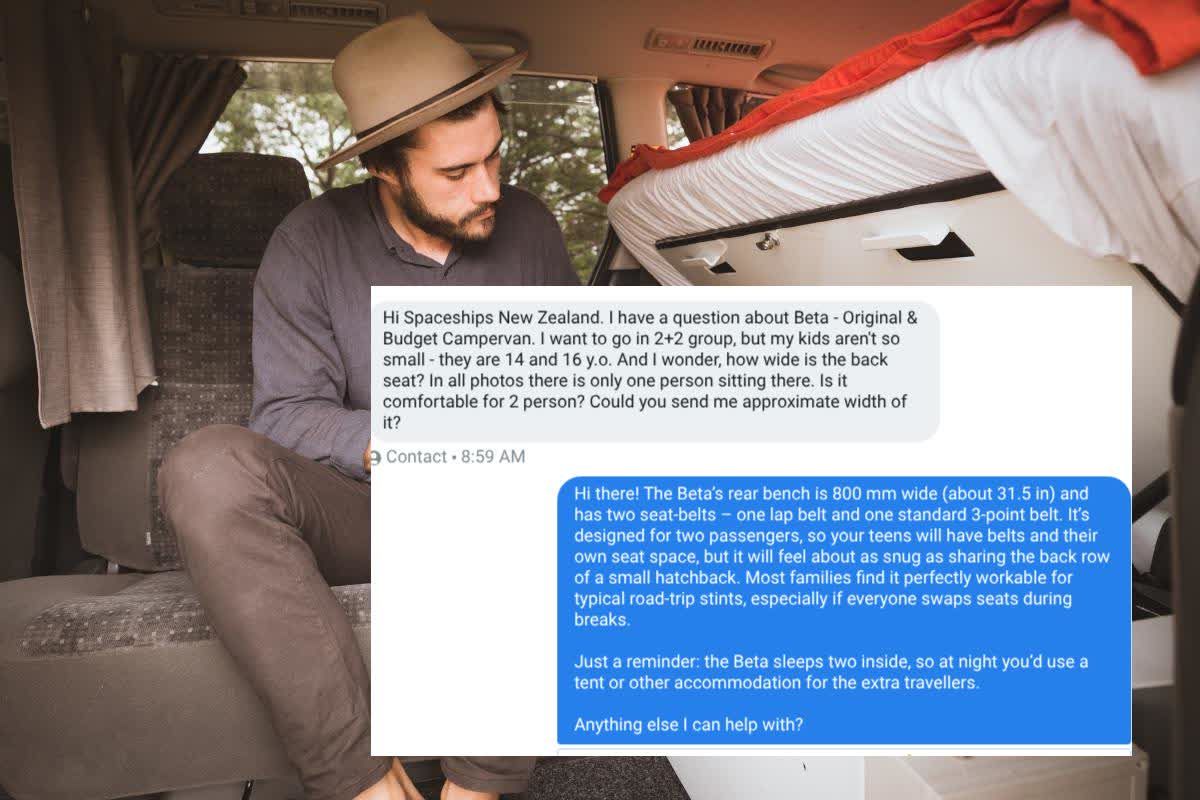
In our case, AI is now taking care of the first round of questions or issues that customers report via WhatsApp. It takes care of the “easier” questions so staff has more time for the complicated cases or the ones related to the booking system, all the issues where the personal touch of a human is needed. Let the bots handle the repetitive tasks.
For small businesses AI tools can be really beneficial as you can automate the tasks you don’t have the manpower for. Just keep in mind that most AI projects are not ‘set and forget’. An AI customer service project like the one mentioned above needs monitoring and regular tweaking.
Why? Well, because AI’s reasoning is black and white. For example, in the campervan rental case… There are sometimes moments where items that should be included with the campervan are missed (we’re only human) or aren’t working as expected due to normal wear and tear. When an included item like a gas stove malfunctions, AI has the power to tell customers to buy a new one at a local store, save the receipt and get reimbursed for it.
But in that reasoning flow of small missing or malfunctioning items, an issue like “we left the petrol cap at the fuel station” leads to the same outcome for AI: get a new one and will reimburse you. So an extra rule needs to be added to cover situations where the customer has lost an item and is responsible for replacing it. You will need to keep updating AI’s rules and training data.
More AI in digital marketing
Well there is a lot more that I use AI for in digital marketing. The use of AI basically changes weekly. And there are so many business-related tasks & projects I cannot talk about due to their confidential nature.
Beware of the pitfalls of AI
Just look around you and you’ll see so many people stepping into the pitfall of AI. From using it to process sensitive customers information to copy-pasting its output as final result.
Always remember that what you put into public systems is saved somewhere and may be re-used elsewhere. It’s not your personal buddy or coach that won’t tell you secrets. It was trained on massive amounts of public data – and some of it wasn’t collected in such an ethical way… Another Friday afternoon discussion.
Don’t become complacent and lazy when using AI. Be on your toes and stay critical.
Use it in moderation… Like any good craft beer or wine. Quality over quantity.
What are your plans with AI, dear reader?
How are you using AI in digital marketing? What are you doing with it? What are your worries? Is ethical use of AI a concern for you? Have you thought about all these things and answered these questions for yourself.
AI can add value for sure, if used thoughtfully and integrated well. Pop a coin in the AI Pinball Machine and see what your score (results) will be. Life is like a pinball machine: you never know where the ball will end up… And maybe you’ll get an extra ball.
Game on, pinball and AI fans.
I love AI. I love you, New Zealand.